Wisdom Teeth
Causes for wisdom teeth (third molars) removal and clinical cases.
Wisdom teeth (third molars)
Causes leading to wisdom teeth removal
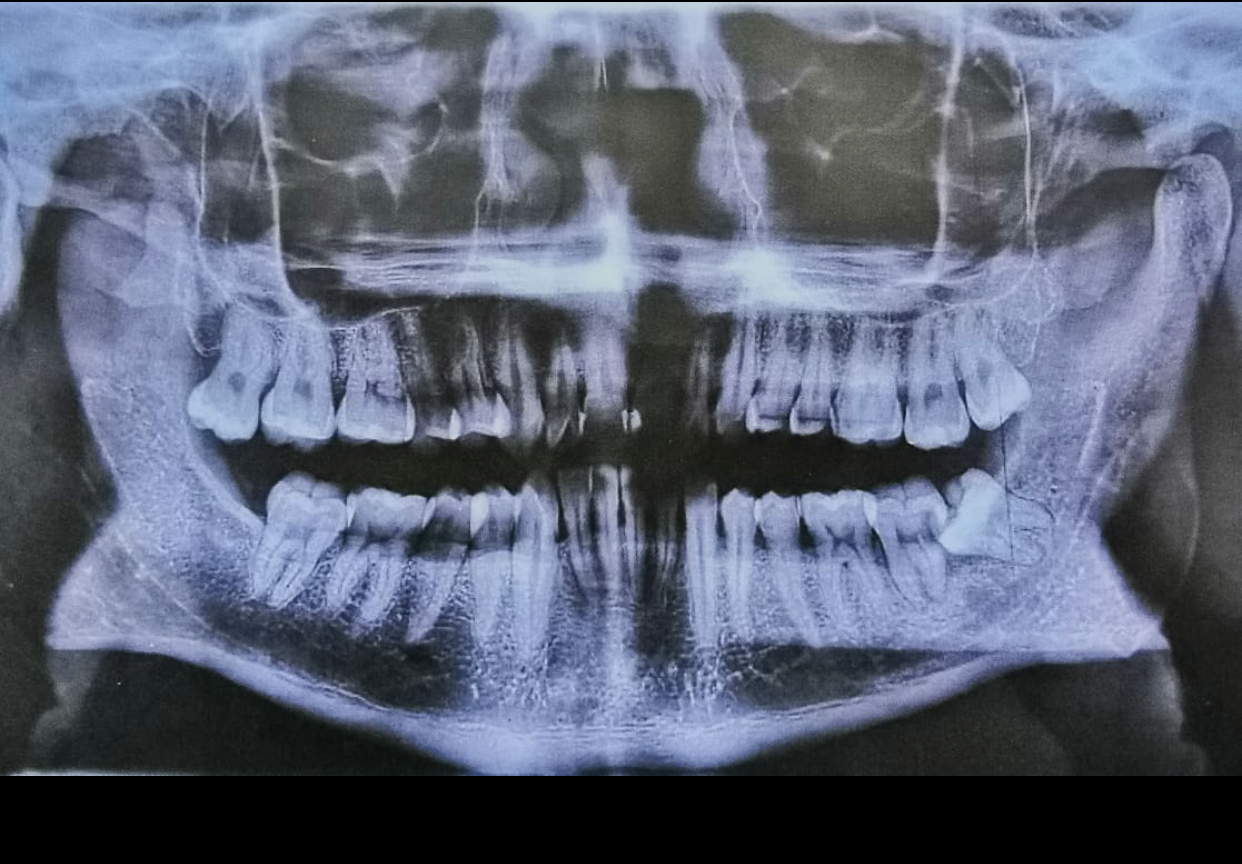
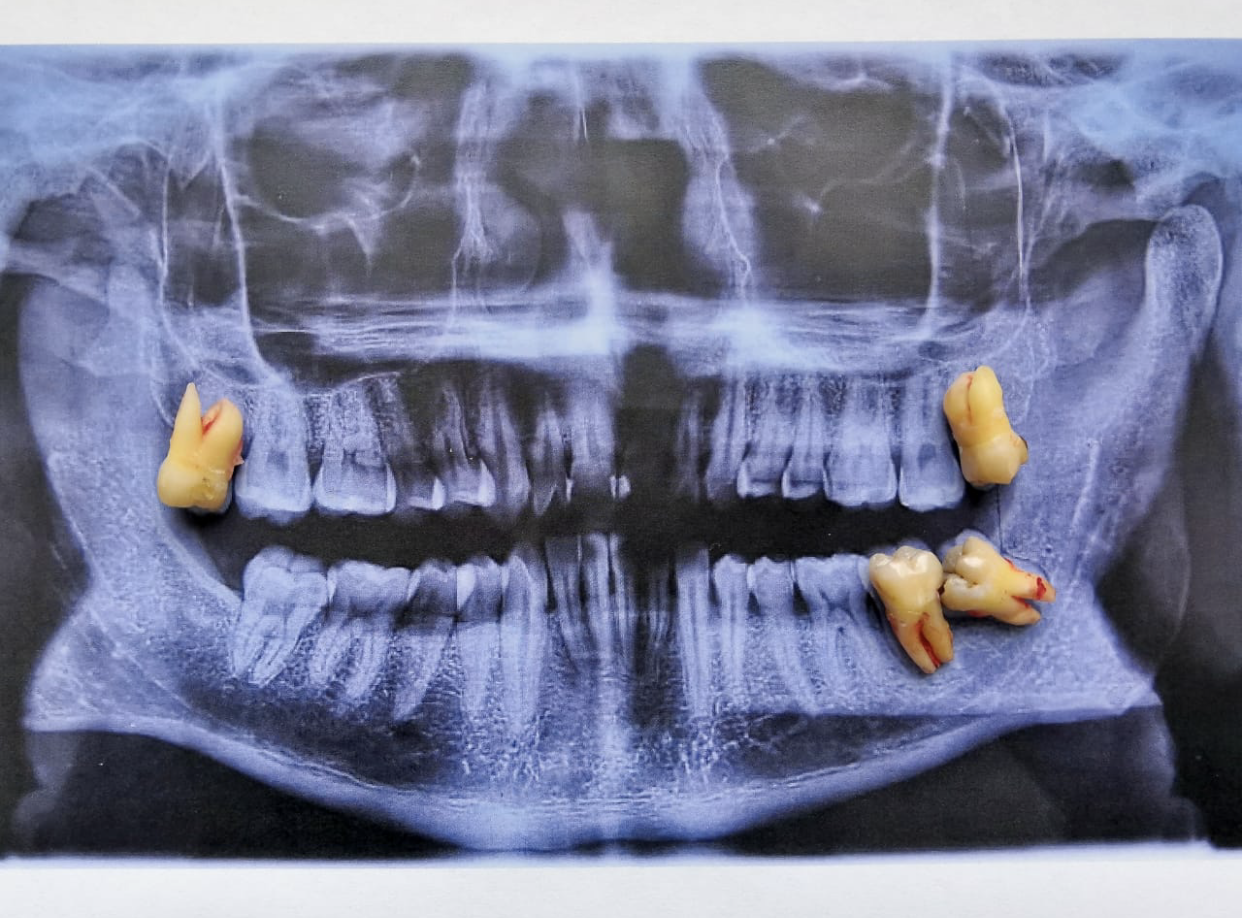
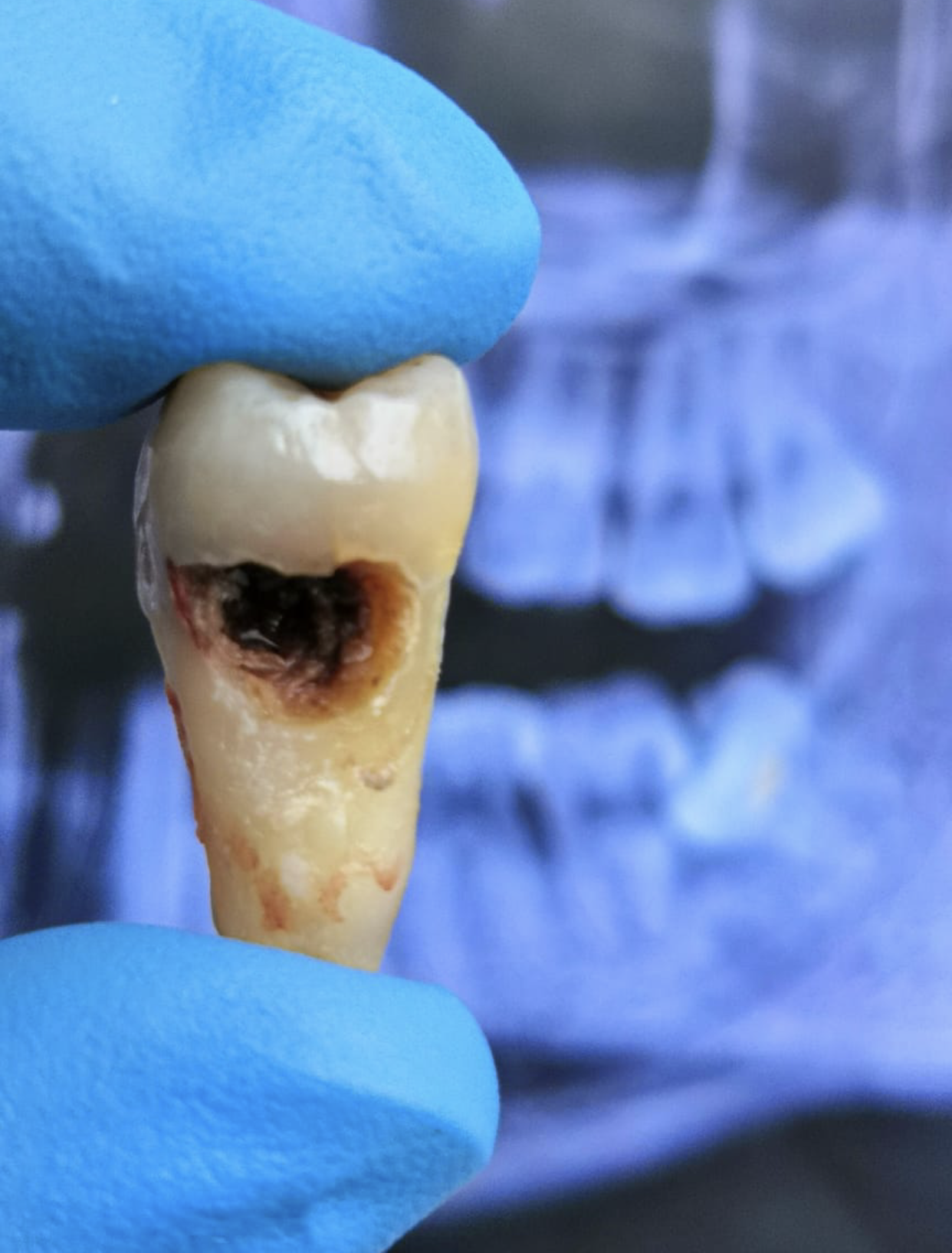
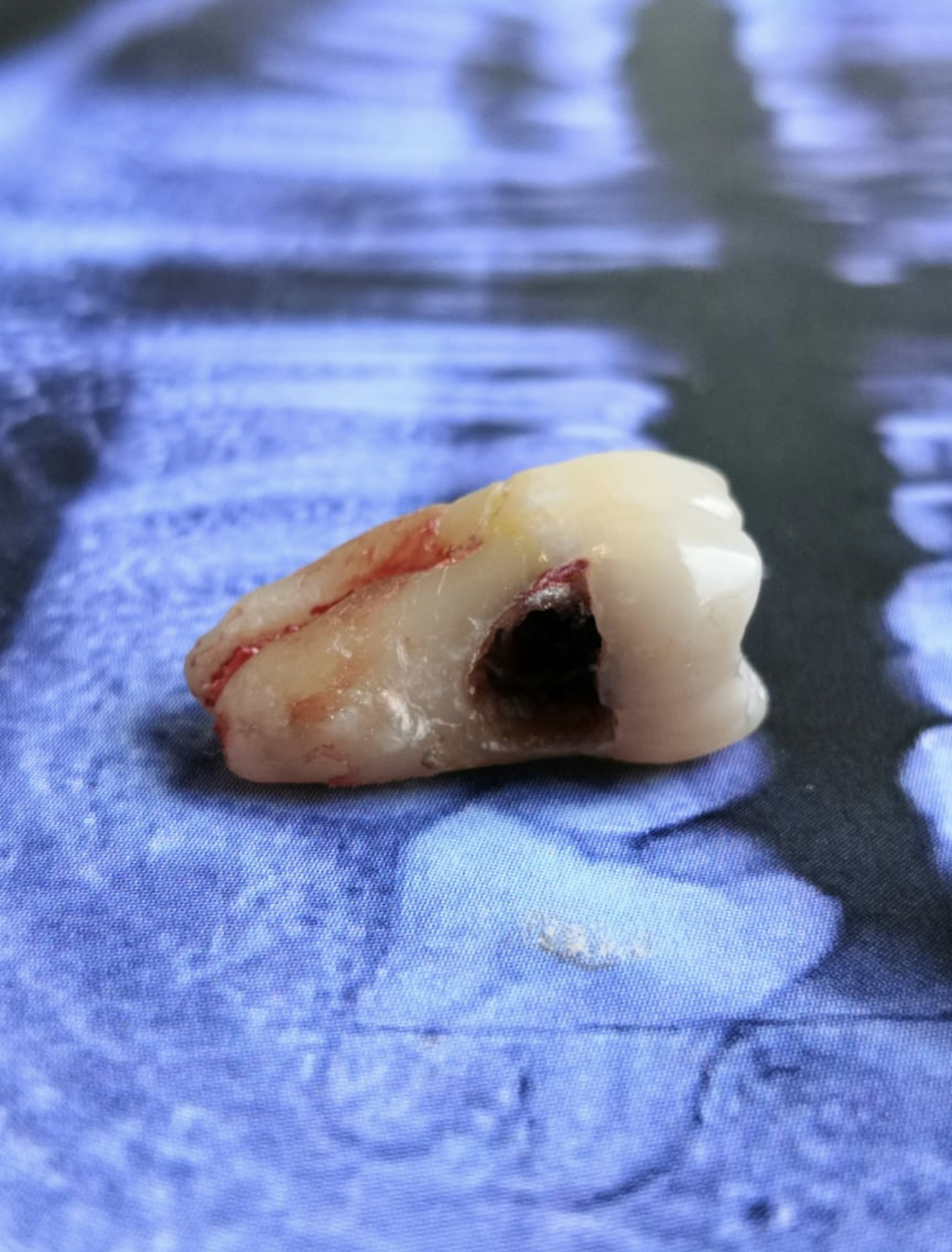
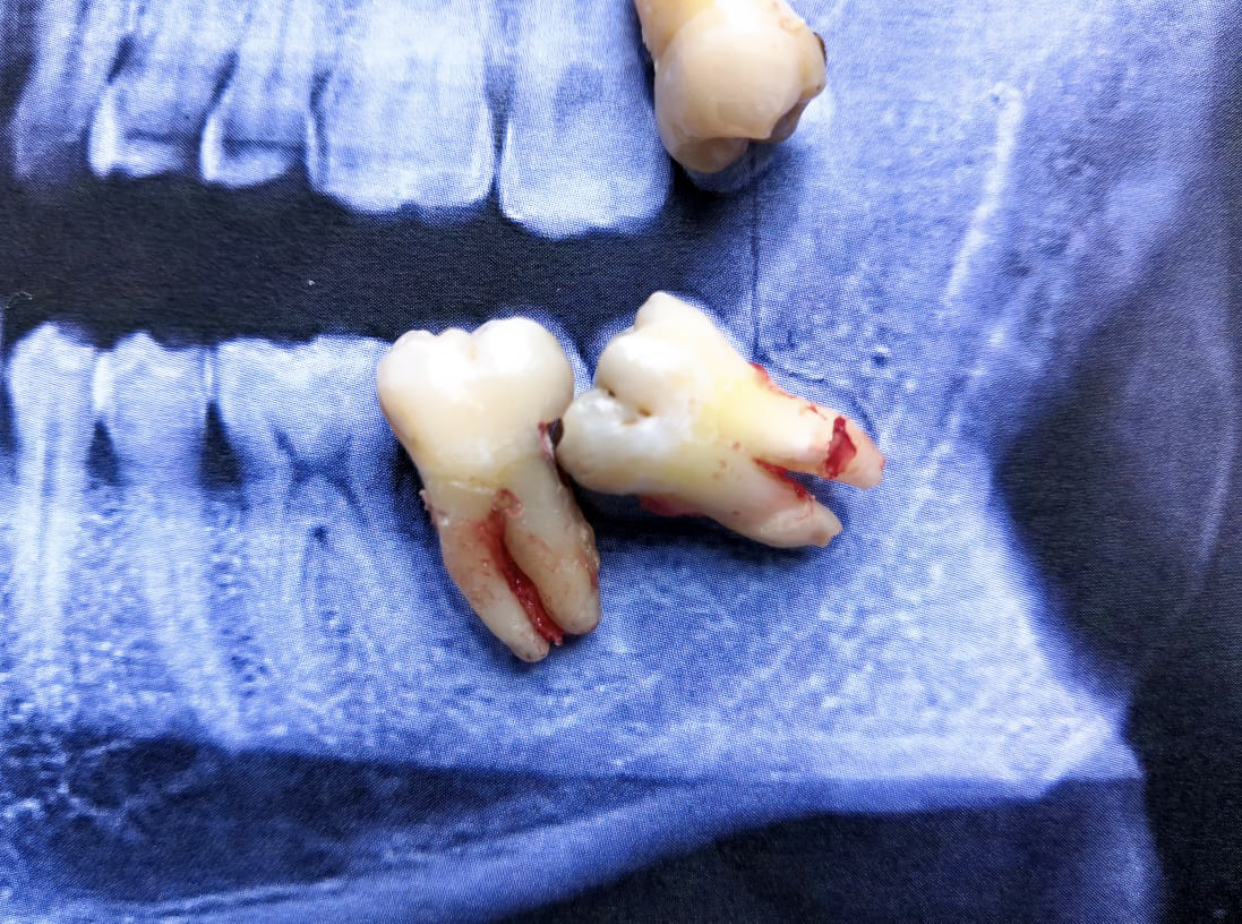
Among the reasons for the removal of a third molar (wisdom tooth), as seen on radiographs, is the damage it can eventually cause to adjacent teeth. Problems associated with third molars include cavities (due to the difficulty of hygiene in the area), impacted food (causing bad breath and pain), infection (pericoronitis), as well as dental crowding resulting in crooked teeth. The presence of problematic wisdom teeth can also cause the development of pathologies, usually benign, but which can become malignant.
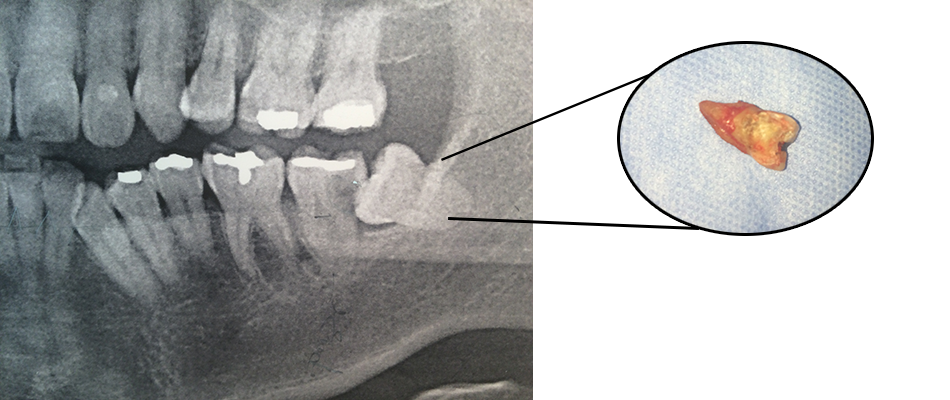
Case 1: Wisdom teeth extraction
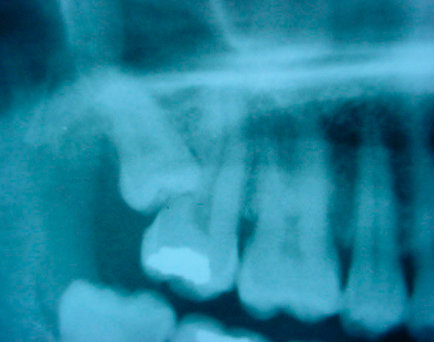
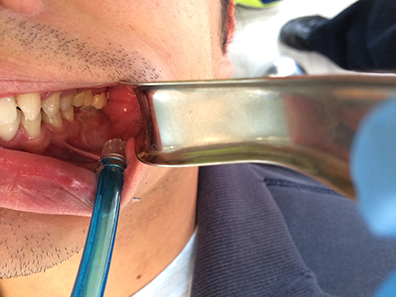
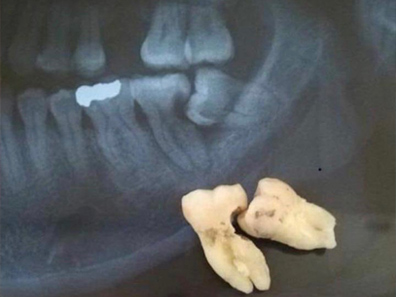
Third molar in an unfavorable position relative to the second molar, which may cause loss of the second molar.
Case 2: Wisdom teeth extraction
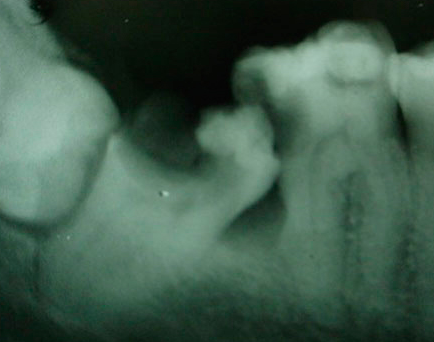
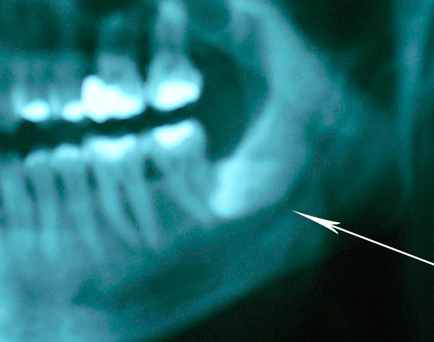
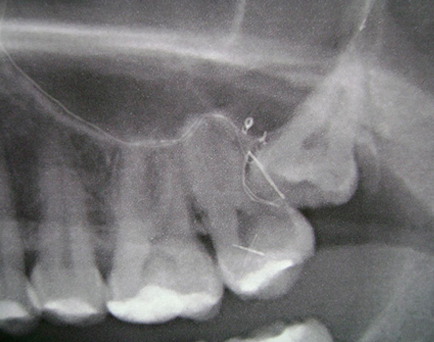
Picture 1: Cavities in the first and second molar caused by the third molar, resulting in loss of all three molars.
Picture 2: Rhizolysis (root resorption) of the second molar.
Case 3: Wisdom teeth extraction
Picture 1: Obstruction of the second molar by the third molar.
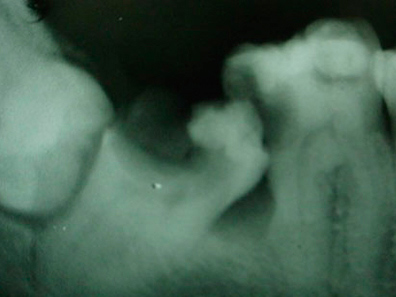
Picture 3: Third molar supra-eruption (extrusion) causing precancerous white lesions (leukoplakia). This latter case shows another reason why we must remove superior third molars: since they do not have an opposing tooth to bite against, they may extrude (downwards) and injure the gum, eventually causing leukoplakia.
Case 4: Wisdom teeth extraction
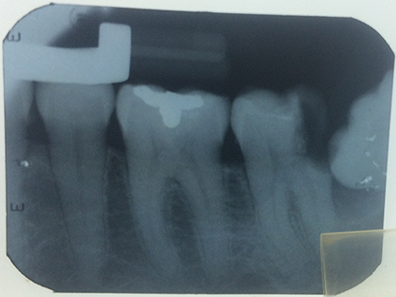
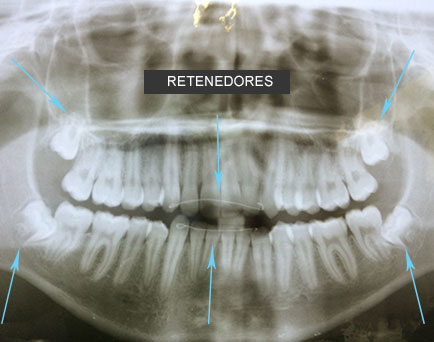
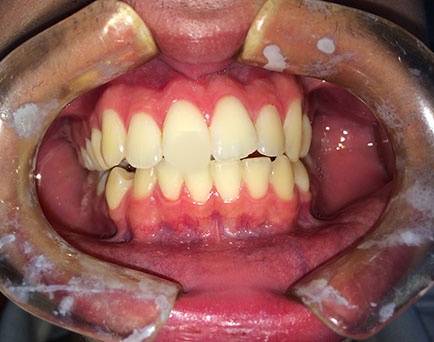
Another indication for removing a wisdom tooth is to avoid resultant crowding and crooked teeth. The patient shown in the following images had undergone orthodontic treatment three years prior. Even with fixed retainers, as seen in the radiograph, the eruptive force of third molars caused overcrowding. Wisdom teeth removal is recommended before finalizing orthodontic treatment to avoid this complication.
Case 5: Wisdom teeth extraction
Another indication for extracting a third molar (wisdom tooth) is an anatomical alteration of third molars.
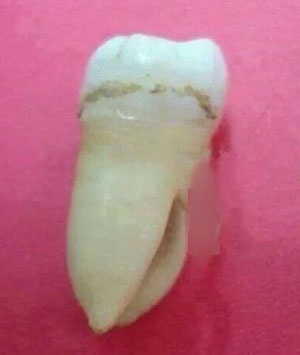
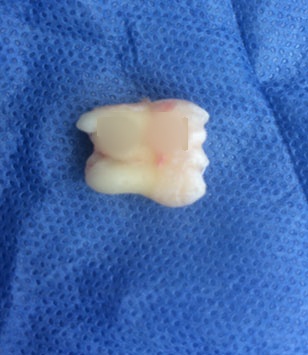
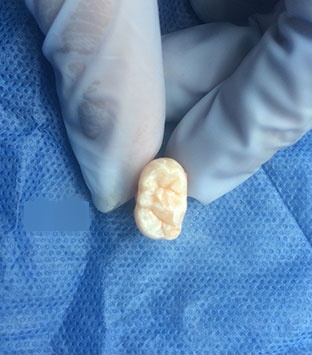
Third molar malposition
Another indication for extracting a third molar (wisdom tooth) is the malposition of third molars.
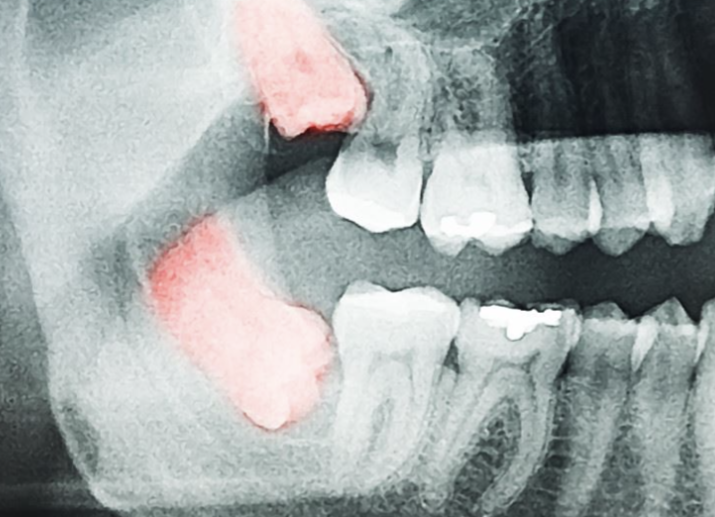
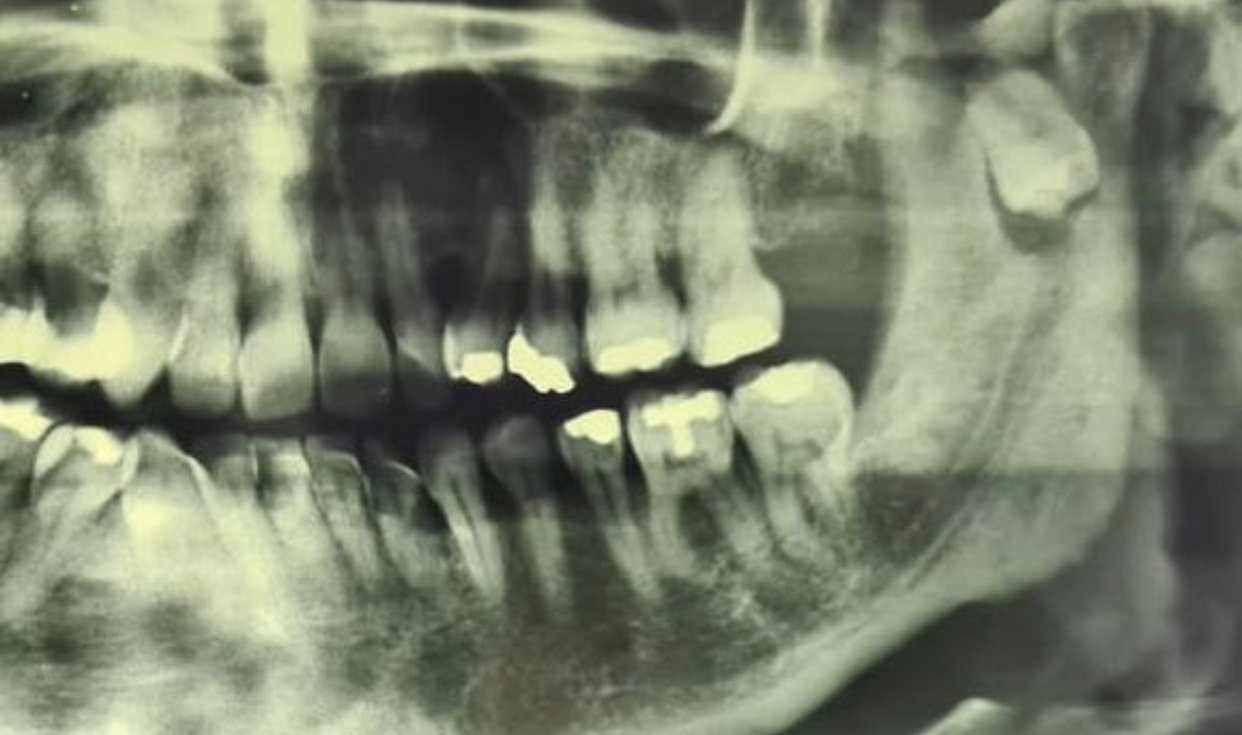
Case: Second molar loss due to caries caused by a third molar
In some patients, a third molar can promote food retention and make hygiene difficult, increasing the risk of caries and damage to the second molar.